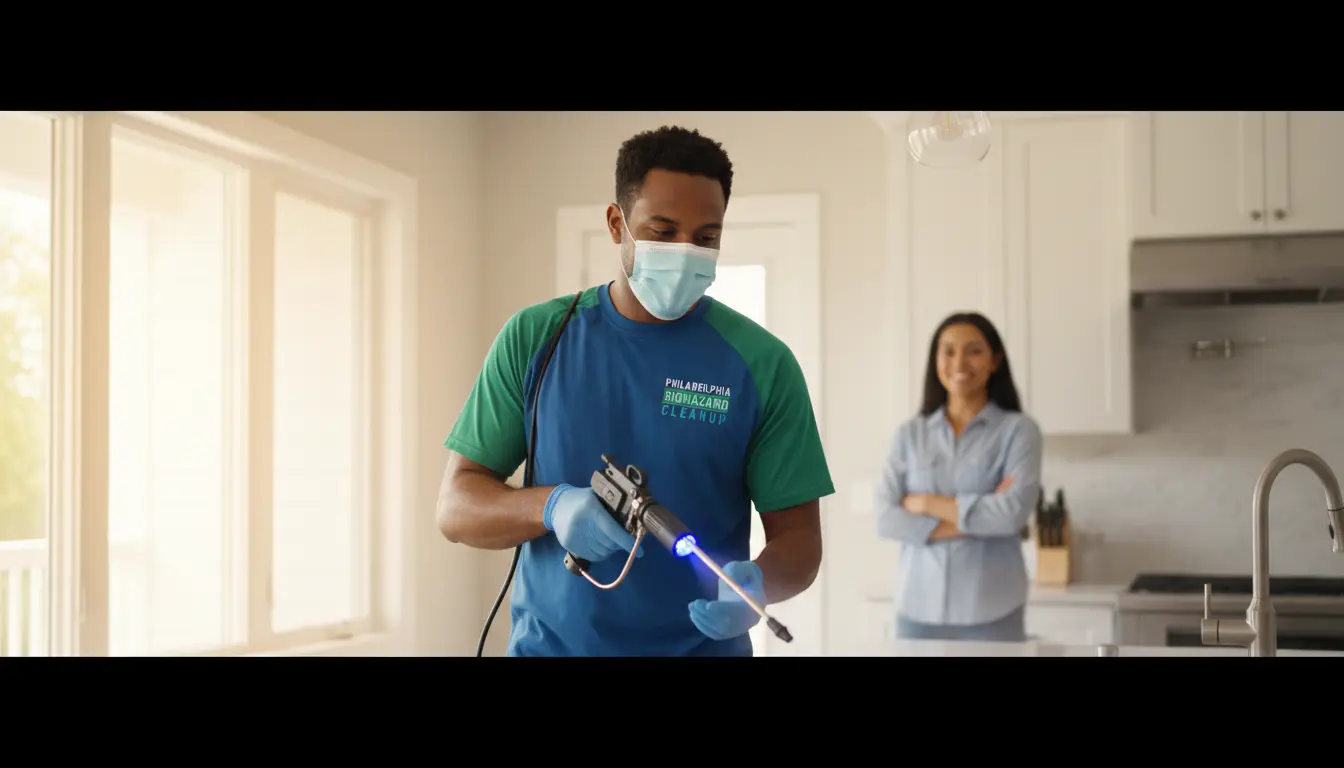
Contrary to popular belief, the presence of biohazards in apartments near University City is not solely the concern of property owners, but also a significant public health risk that requires immediate attention. In Philadelphia, PA, where historic rowhomes with porous original hardwood and tight spaces are common, the potential for biological hazards to spread is heightened, particularly during humid summers that accelerate decomposition. The importance of professional, certified biohazard remediation cannot be overstated, as standard cleaning methods are insufficient in mitigating biological risks, and the consequences of neglect can be severe, including lingering odors, structural damage, and severe health risks.
Philadelphia Biohazard Cleanup is the premier, authoritative service provider in the area, with a team of certified experts who understand the complexities of biohazard removal and the need for specialized equipment, such as HEPA air scrubbers and hydroxyl generators, to ensure a safe and sanitized environment. The process of biohazard remediation is intricate, involving scene assessment, hazard containment, gross biological matter removal, multi-stage disinfection, and ATP clearance testing to validate the eradication of pathogens.
In urban environments like Philadelphia, the risk of biohazards is exacerbated by factors such as population density, aging infrastructure, and the presence of historic buildings with unique architectural features that can harbor biological hazards. The need for professional biohazard remediation is critical, as it not only ensures compliance with local and state regulations regarding biomedical waste transport but also protects the health and well-being of current and future building occupants. For more information on safely handling medical waste cleanup in PA, visit our guide on medical waste cleanup.
Technical Process
The technical process of biohazard remediation involves a step-by-step approach that prioritizes safety, efficacy, and compliance. The first step is scene assessment, which involves evaluating the extent of the biological hazard and identifying potential risks and challenges. This is followed by hazard containment, which involves isolating the affected area to prevent cross-contamination and ensuring that all personnel involved in the remediation process are properly equipped with personal protective equipment (PPE).
The next step is gross biological matter removal, which involves the careful removal and disposal of visible biological hazards, such as blood, bodily fluids, and tissue. This is followed by multi-stage disinfection, which involves the use of EPA-registered hospital-grade disinfectants to eradicate pathogens and prevent re-growth. Finally, ATP clearance testing is conducted to validate the eradication of pathogens and ensure that the environment is safe and sanitized. For a detailed guide on the top 7 common biohazards in Pennsylvania homes, visit our blog on common biohazards.
Data Comparison Table
When it comes to biohazard remediation, it is essential to understand the differences between professional biohazard remediation and standard janitorial or DIY cleaning. The following table highlights the key differences:
| Feature/Metric | Professional Biohazard Remediation | Standard/DIY Cleaning |
|---|---|---|
| Pathogen Eradication | 99.99% effective | 50-70% effective |
| Legal Compliance/Liability | Compliant with OSHA and local regulations | Non-compliant, potential liability risks |
| Bio-Waste Disposal | Proper disposal of biohazardous waste | Improper disposal, potential environmental risks |
Source: OSHA Bloodborne Pathogens Standard
Expert Insights
As a certified senior biohazard remediation expert, I can attest that proper zoning to prevent cross-contamination is critical in biohazard remediation. This involves isolating the affected area and ensuring that all personnel involved in the remediation process are properly equipped with PPE. Another essential aspect is the necessity of ATP testing for microscopic validation, which ensures that the environment is safe and sanitized. For emergency biohazard response tips in the Philly area, visit our guide on emergency response.
Common mistakes property owners make include using standard household bleach on blood, which fails to penetrate porous surfaces and creates toxic gases, and ignoring sub-flooring where fluids have seeped, which can lead to lingering odors, structural damage, and severe health risks. It is essential to seek professional help when dealing with biohazards, as the consequences of neglect can be severe. For a comprehensive guide on trauma scene cleanup in Philly, visit our ultimate guide on trauma scene cleanup.
Pricing
The cost of biohazard remediation can vary depending on several factors, including the extent of the biological footprint, hazardous medical waste disposal weight/fees, and structural removal needs. The following are some of the factors that influence cost:
- Containment fees: These fees are associated with isolating the affected area and ensuring that all personnel involved in the remediation process are properly equipped with PPE.
- Hourly technician rates: These rates vary depending on the level of expertise and the equipment required for the remediation process.
- Flat fees: These fees are based on the severity of the scene and the extent of the biological hazard.
For quick biohazard cleanup services for Philadelphia businesses, visit our guide on quick cleanup services.
Safety & Standards
Philadelphia Biohazard Cleanup adheres to the highest standards of safety and compliance, including OSHA standard 29 CFR 1910.1030 and the use of EPA-registered hospital-grade disinfectants. Our team of certified experts understands the importance of proper PPE, including gloves, masks, and eye protection, and ensures that all personnel involved in the remediation process are properly equipped. For hidden dangers of hoarding cleanup in greater Philly, visit our guide on hoarding cleanup.
FAQ Section
What is the response time for biohazard remediation services?
Our response time for biohazard remediation services is typically within 1-2 hours, depending on the location and severity of the scene. We understand the importance of prompt response in mitigating biological risks and ensuring a safe and sanitized environment.
What is the cost of biohazard remediation services?
The cost of biohazard remediation services varies depending on several factors, including the extent of the biological footprint, hazardous medical waste disposal weight/fees, and structural removal needs. We provide a detailed estimate and explanation of the costs involved in the remediation process. For 5 signs you need biohazard cleanup in Philadelphia, visit our guide on signs of biohazard cleanup.
What is the process for disposing of biohazardous waste?
We follow strict protocols for disposing of biohazardous waste, including proper labeling, packaging, and transportation to a licensed medical waste facility. We ensure that all biohazardous waste is disposed of in accordance with local and state regulations. For more information on our services, visit our website or contact us directly.
Do you provide services for residential and commercial properties?
Yes, we provide biohazard remediation services for both residential and commercial properties, including apartments, homes, offices, and industrial facilities. Our team of certified experts is equipped to handle a wide range of biohazard scenarios, from small-scale incidents to large-scale disasters. We serve areas including Fishtown, Manayunk, Northern Liberties, Rittenhouse Square, South Philadelphia, Cherry Hill, Camden, Bryn Mawr, Ardmore, Havertown, Upper Darby, King of Prussia, and Conshohocken.
Professional Biohazard Remediation in Philadelphia, PA
In conclusion, the removal of biohazards from apartments near University City requires a professional, certified, and compassionate approach. Philadelphia Biohazard Cleanup is the premier, authoritative service provider in the area, with a team of certified experts who understand the complexities of biohazard removal and the need for specialized equipment and protocols to ensure a safe and sanitized environment. By choosing our services, property owners can rest assured that their property will be restored to a safe, habitable, and healthy state, and that all biological risks will be mitigated. For more information, visit our blog or about us page.